Plan
- Ahmad Firoozi
- Dec 3, 2022
- 1 min read

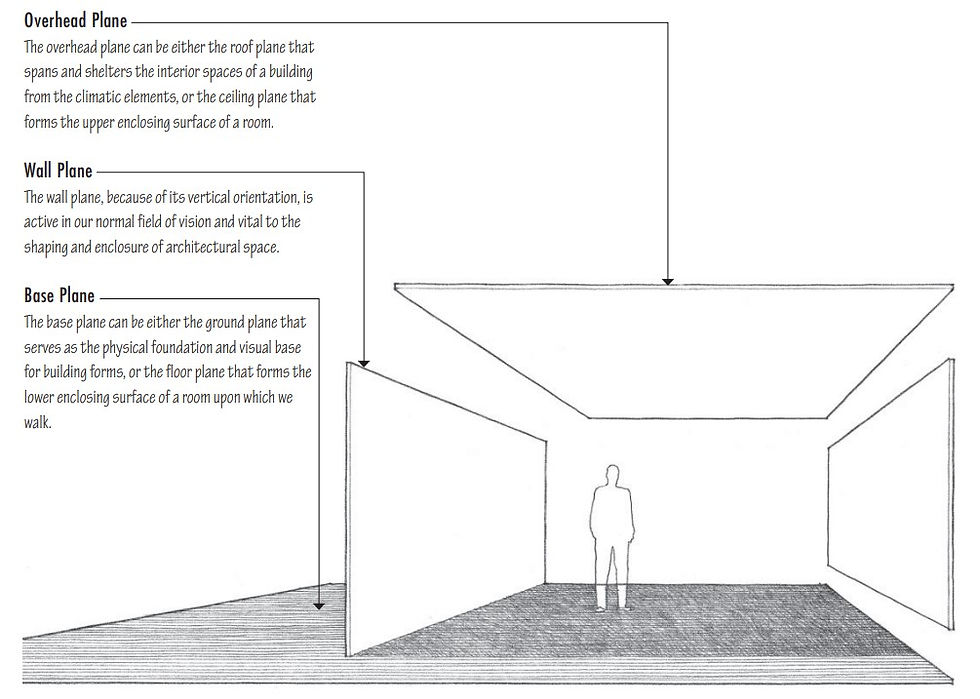
Planes in architecture define three-dimensional volumes of mass and space. The properties of each plane-size, shape, color, texture as well as their spatial relationship to one another ultimately determine the visual attributes of the form they define and the qualities of the space they enclose.
The ground plane ultimately supports all architectural construction. Along with climate and other environmental conditions of a site, the topographical character of the ground plane influences the form of the building that rises from it. The building can merge with the ground plane, rest firmly on it, or be elevated above it.
The ground plane itself can be manipulated as well to establish a podium for a building form. It can be elevated to honor a sacred or significant place; bermed to define outdoor spaces or buffer against undesirable conditions; carved or terraced to provide a suitable platform on which to build; or stepped to allow changes in elevation to be easily traversed.


Comments